


The Department of Mechanical Engineering (DTM), Vocational College of Universitas Gadjah Mada, carried out a community service initiative titled “Enhancing the Competence of Waste-Conscious Communities through Innovation and Engineering in Kulon Progo Regency” on 8–10 September 2025. The program was led by Dr. Eng. Ir. Agustinus Winarno, S.T., M.Eng., supported by lecturers, students, educational staff, and local community partners. The implementation team included Handoko, Setyawan Bekti Wibowo, Irfan Bahiuddin, Bambang Hari Priyambodo, Luthfi Athaya Wicaksono, and Ahmad Muhsin Al Mataromi, together with collaborators from KSM Melati and KSM Dadi Asri, represented by Royke Oktavianus Labiro and Suyatin.
The activities were held at the Department of Mechanical Engineering, Vocational College UGM, and Fablab Jogja Indonesia, Field Research Center (FRC), UGM Kulon Progo. This initiative responds to the pressing issue of household organic waste management in Indonesia. According to SIPSN (2022), the country generated approximately 68.5 million tons of waste, with 57.1% categorized as organic waste—highlighting the need for community-based decentralized management to reduce landfill burden and strengthen local circular economies.
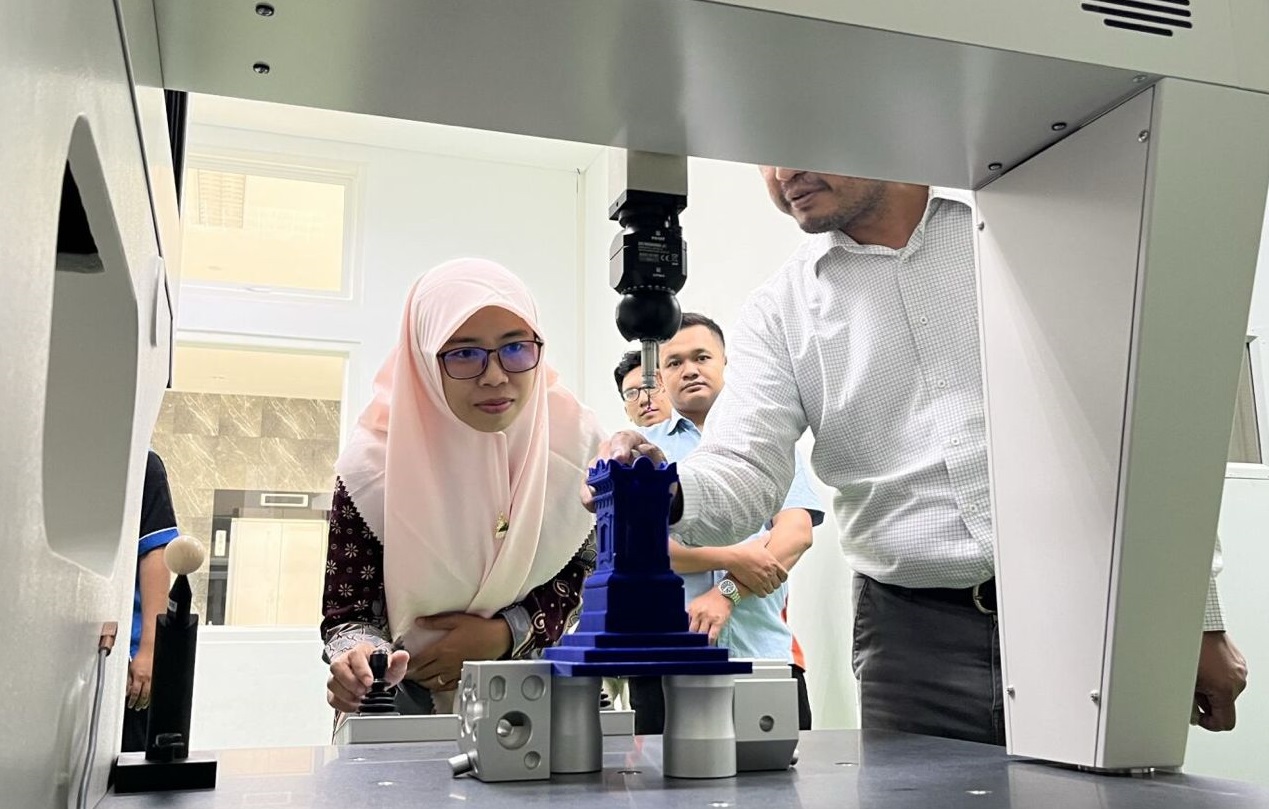
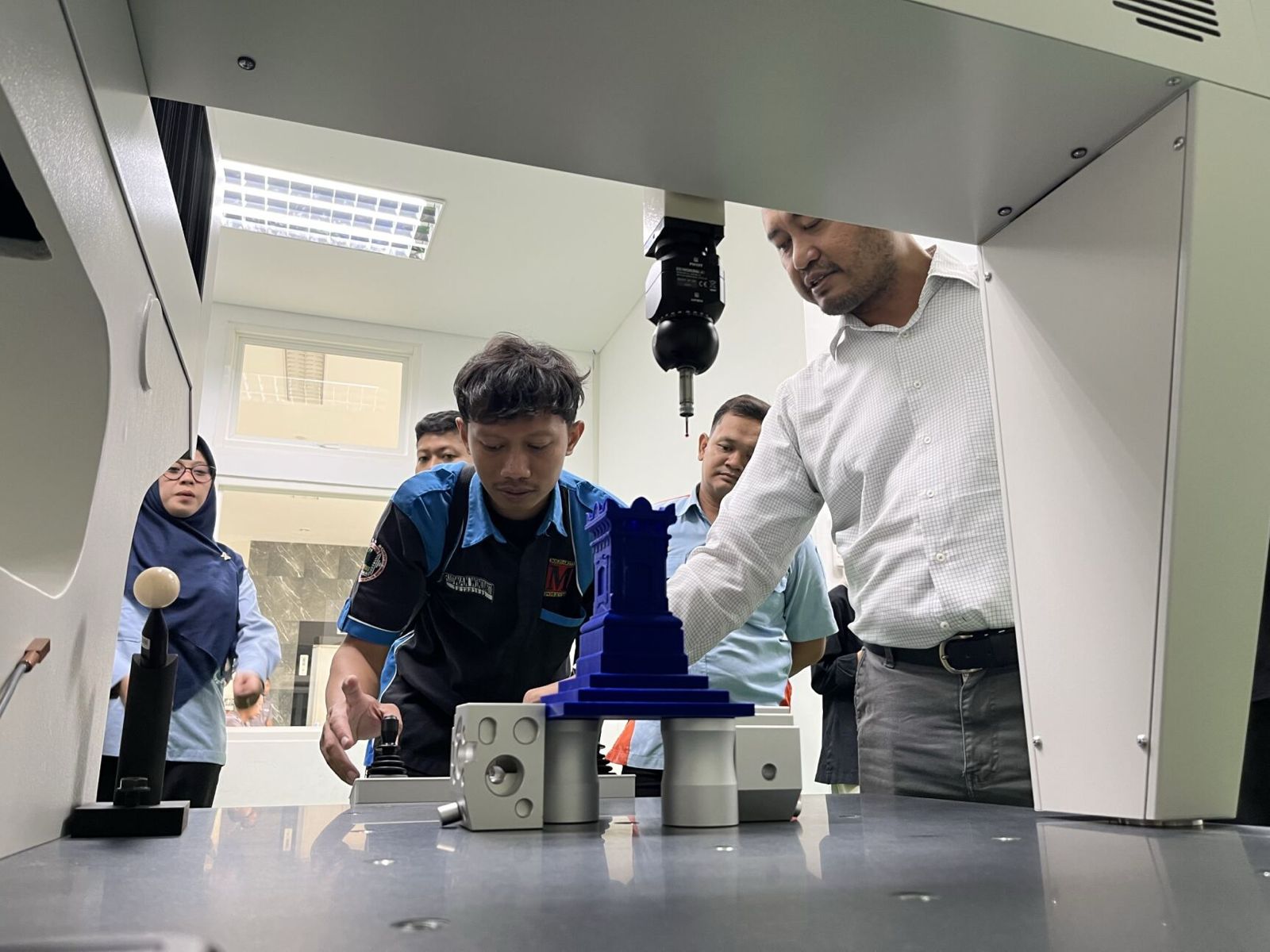
The partner communities, KSM Melati and KSM Dadi Asri, have been actively involved in environmental education and maggot-based organic waste processing. However, participatory assessments by the CoE FabLab SV UGM (2023–2024) identified limitations in technical skills, digital design capabilities, and access to problem-based training—hindering their ability to independently develop supporting tools such as maggot boxes. The PRA Anthropocene 2025 research further emphasized the necessity of bridging technological innovation with local wisdom.
To address this challenge, the program adopted a hackathon-based collaborative innovation model, widely recognized for its effectiveness in producing structured engineering solutions within limited timeframes. This approach aligns with the Fab Camp Challenge conducted by the Vocational College UGM, which brings together students, academics, communities, and local government in multidisciplinary innovation workshops.
The training applied a project-based methodology using digital fabrication technologies such as CAD modeling, 3D printing, and rapid prototyping. Facilitated by lecturers and students, participants engaged in co-design, iterative prototyping, and functional testing.
Through this collaborative process, community members successfully enhanced their technical competence in designing and developing improved maggot box prototypes tailored to local needs—more ergonomic, accessible, and adaptable. The activities strengthened the integration of engineering innovation, community empowerment, and circular economy practices rooted in local resources.
This initiative contributes to the advancement of several Sustainable Development Goals (SDGs), particularly SDG 4 (Quality Education) through capacity building; SDG 11 (Sustainable Cities and Communities) through community-based waste management; SDG 12 (Responsible Consumption and Production) via organic waste reduction; and SDG 17 (Partnerships for the Goals) through collaborative action between academia, communities, and local stakeholders.