


The Department of Mechanical Engineering, Vocational College of Universitas Gadjah Mada, in collaboration with the Office of Industry, Transmigration, and Manpower of Tegal Regency, has successfully completed the Electric Scooter Fabrication Training Program aimed at strengthening the technical capacity of local metal-based SMEs. The event was officially opened by I. Riesky Trisbiantoro, SE., MA., MT., Head of the Office of Industry, Transmigration, and Manpower of Tegal Regency.

The program engaged a team of lecturers from the Department of Mechanical Engineering SV UGM, namely Dr. Ir. Sugiyanto, S.T., M.Eng., IPM; Dr. Ir. Lilik Dwi Setyana, S.T., M.T., IPM; Ir. Irfan Bahiuddin, S.T., M.Phil., Ph.D., IPM, ASEAN Eng.; Ir. Budi Basuki, S.T., M.Eng.; and Ir. Andhi Akhmad Ismail, S.T., M.Eng. These lecturers served as expert instructors, delivering technical guidance on materials, mechanical design, electrical systems, automation, and vehicle safety. Laboratory technical support was provided by Isworo Djati, S.T.
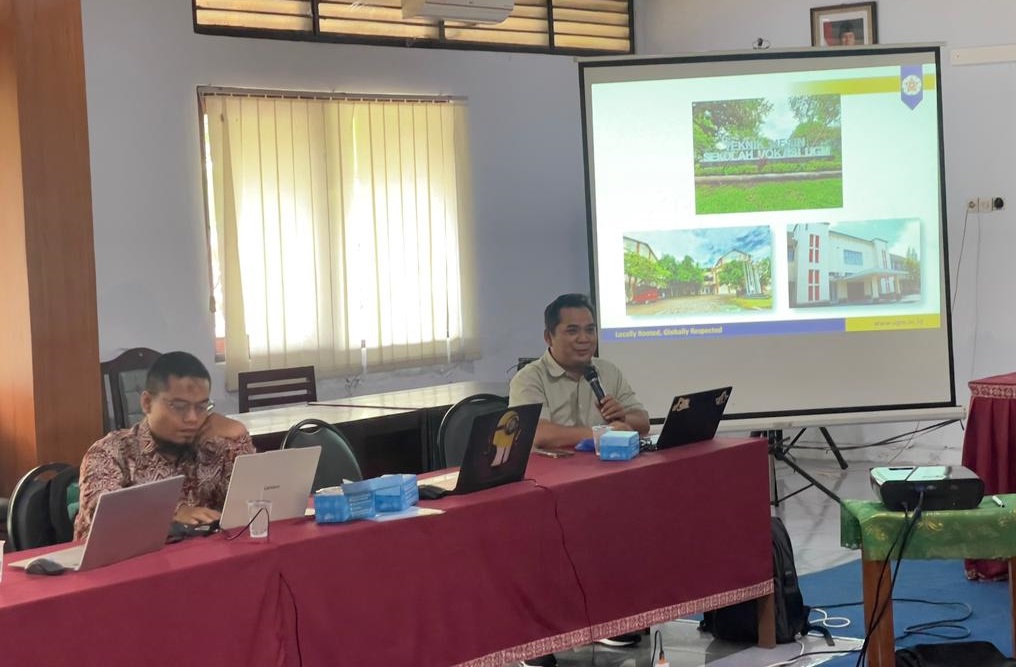

The prototype development process was further strengthened by the Yacaranda/PBL Team, led by Muhammad Hassya Revansyach Pane, who—with several other students—contributed to design formulation, manufacturing execution, and on-site technical coordination. Their involvement showcases the applied nature of vocational engineering education and its relevance to industry needs.


Throughout the training, participants received modules covering material engineering, fundamental electrical systems, automation principles, manufacturing processes, intellectual property, and an introduction to electric scooter architecture. They also engaged in hands-on assembly and product teardown, allowing them to analyze components, understand integration challenges, and propose improvements for future iterations.
The initiative also benefited from the participation of PT Kanindo Metal Industri, which offered industrial insight on manufacturability and SME-level production readiness, ensuring that the prototype design aligns with realistic industry workflows.

This collaborative program strengthens the technological capacity of regional SMEs, promotes the development of locally manufactured electric vehicles, and enhances the synergy between academia, government, and industry. The initiative supports several Sustainable Development Goals (SDGs), particularly SDG 4 (Quality Education), SDG 7 (Affordable and Clean Energy), SDG 9 (Industry, Innovation and Infrastructure), and SDG 17 (Partnerships for the Goals).